
What to Do When a Loved One Relapses

Recognizing and understanding the problem, and helping a loved one reach the point of accepting treatment and entering into recovery, is an important milestone. But what happens after they have been treated and start to use or drink again!?

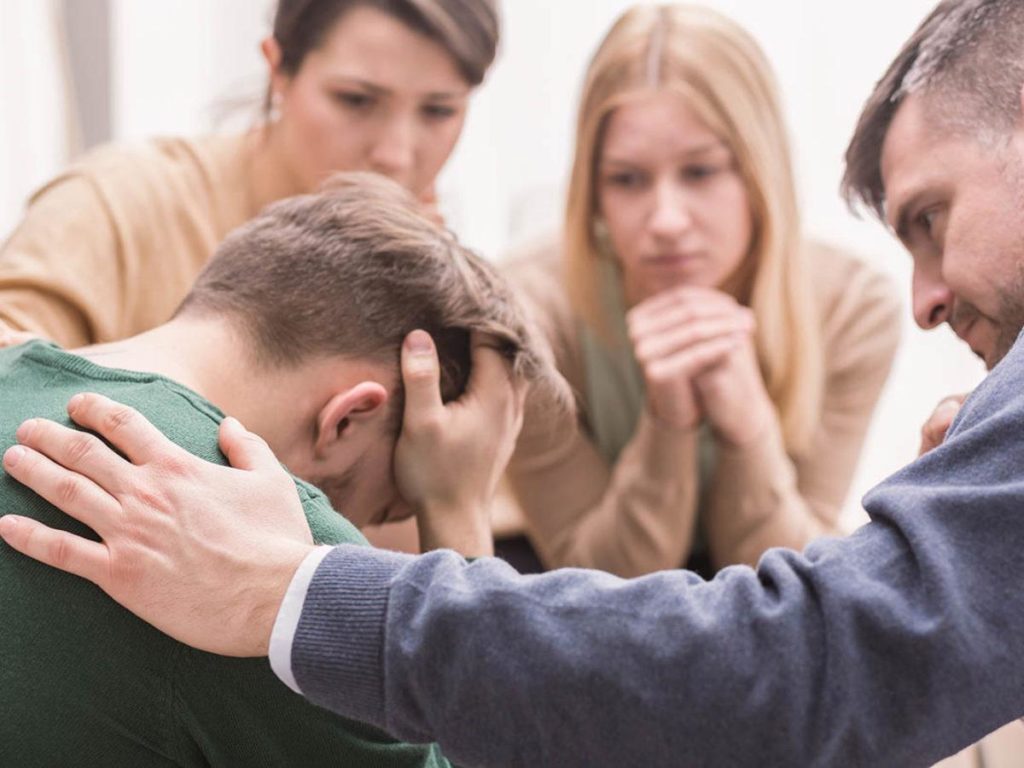
Watching a loved one relapse can be gut-wrenching. It’s normal to experience a flood of emotions. You may feel angry, sad, scared, and resentful. You thought this was behind you and your family, and now, here you all are again. The truth is that like any other disease an individual can regress or relapse. But that does not mean that your loved one is doomed to a life of addiction.

It’s easy to become frustrated by your loved one’s repeated attempts to stop using drugs and/ or alcohol. It’s very easy to think that if they wanted to stop, they would just stop. It may seem that simple in the mind of someone who has never struggled with addiction, but it isn’t that simple at all. In fact, drug and alcohol relapse is a common part of addiction recovery. SO NOW WHAT? What can a family do to help their loved one?

FAMILY INTERVENTION 

It is difficult if not impossible to see the situation from the stage. A clearer understanding most often comes from the view in the balcony. The intervention process helps families see from a different perspective.

Being emotionally attached and overwhelmed can compromise the family’s ability to find a successful solution. A professional Interventionist is able to see things from a different perspective and help determine if a family intervention is appropriate.

The Many Ways Addiction Affects The Family

Battling a substance use disorder is viewed by many as a personal experience. Because harmful substances have devastating effects on the user, many may not take into consideration the other people involved. Spouses, children, and parents may all be impacted by the way addiction affects the family.

The effects of drug and alcohol addiction can be both short-term and long-term. Peaceful, loving homes can be divided by the strain caused by drug and alcohol abuse. Conflict becomes normal as family members fight to engage with their loved one who abuses alcohol, for example. Trust begins to erode. Family members may become more guarded when a loved one is abusing illicit substances acts with aggression or hides their disorder in secrecy. Marriages can end due to changes caused by addiction. Communication becomes increasingly difficult, if not impossible, which only heightens frustrations.

GET HELP 

Compounding the aforementioned challenges and frustrations is the fact that recovering from a relapse can be very difficult for an individual who suffers from addiction. Some folks in recovery say that recovering from the relapse was harder than getting sober the first time around. This is often due to their feelings of disappointment in themselves, accompanied by feelings of guilt and shame. A well planned intervention can help get your loved one and your family back on track and back to recovery. Interventionist Joe Ortiz can serve as your guide and support throughout this process! 

Joe Ortiz
Interventionist
Certified CRAFT Method
Certified Break Free Method

RELATED POSTS

WHEN THE FAMILY OF AN ADDICTED LOVED ONE HAS REACHED ITS BOTTOM Read More »

THE FAMILY’S RECOVERY IS AS IMPORTANT AS THE RECOVERY FROM ADDICTION

How to Help Your Loved One When They Don’t Want Help
I often get calls from friends and family members asking for guidance for a loved one. They are watching a parent, a child, a spouse, or someone they love in pain and want to get them help.

One of the first questions I ask is, “Does the person want help?”

The answer to this question greatly affects the guidance I can offer someone. The frustrating part about any mental illness, including substance use disorders, is that the person who suffers typically has an altered perception of how their actions affect themselves and the people around them. The idea of help may not enter their mind because they truly don’t believe there is a problem. In some cases, this is denial. In other cases, this is a lack of insight.

When walking families through the process of getting help, these are some of my biggest messages:

Get help for yourself first—it’s just like when you are on a plane and the flight attendants remind you to put your oxygen mask on first before you help another person. Working through your own “stuff” helps you be available to your loved ones in a positive way.

Set realistic expectations—often family members just want their loved ones to be “fixed”. I set the tone with families that recovery is a process and you can’t put a timeframe around getting better. Expectations are especially important for parents to orient around as sometimes children are pushed back into activities or school sooner than is recommended.
You can’t work harder than your loved one—there are times that I see family members go into crisis mode getting help for their loved ones as the person sits back without buy-in to the process. As frustrating as it is to sit back and “do nothing”, the person must be willing to engage in their own treatment and recovery before changes can take place.

Time takes time—I have to reiterate to families that we have to allow a person time to recover. Their recovery is not on our timeline, it is their own journey. That does not mean family members don’t have healthy boundaries or reasonable expectations. This is where working with a professional Interventionist can be very helpful for loved ones to have their own parallel journey of recovery.
I enjoy supporting family members through their own journey as their loved one struggles with their addiction. As painful as it can be to watch a loved one suffer, it is also empowering and freeing for family members to learn that they have tools they can use to keep themselves healthy through the process.

There is hope in recovery and my best work is when I can instill that in individuals, their families, and the communities they live in.

Joe Ortiz
Interventionist
Certified CRAFT Method
Certified Break Free Method

RELATED POSTS

THE FAMILY’S RECOVERY IS AS IMPORTANT AS THE RECOVERY FROM ADDICTION Read More »

YES, IT WORKS. YOU ARE WORTH IT. YOUR FAMILY IS WORTH IT!

An Intervention.

One simple word, but yet it evokes such a vast range of emotions. Fear, anxiety, hurt, pain, and bitterness can all keep us from taking this step in addiction recovery. Thoughts that swirl through the mind when contemplating an intervention could include:

  • What will they do?
  • What will they say?
  • What should I say?
  • What if I screw it up?
  • What if they hate me?

This mental narrative can prevent us from taking necessary action. 

YES, IT WORKS. YOU ARE WORTH IT. YOUR FAMILY IS WORTH IT.

Joe Ortiz
Interventionist
Certified CRAFT Method
Certified Break Free Method

RELATED POSTS

YES, IT WORKS. YOU ARE WORTH IT. YOUR FAMILY IS WORTH IT! Read More »

ADDICTIONS EFFECT ON FAMILIES

I wanted to write about this very important subject. When I begin to work with a family, I immediately see the painful and damaging effects their loved one’s addiction is having on them. Every member of that family is negatively impacted in one way or another. They have become sickened and often they are suffering even more than the addict or alcoholic themselves. I say this for the following reasons. First, the addicted or alcoholic loved one is almost always incapable of seeing the destruction they are causing. They honestly do not see “what the big deal is”. Delusion and denial are just two of the classic symptoms of addiction. Second, their addicted loved one has an “escape” from the insanity they create. Their “escape” is their substance of choice. The family typically does not have an escape. Third, by the time a family reaches out for help they are mentally, emotionally and spiritually exhausted.

What is the answer to all this? Recovery. Recovery for the entire family. How is this achieved? The family needs to learn a new perspective and approach to the problem. They need to learn about addiction, enabling, boundaries, natural consequences, and a new way of communicating. And then they need to take action. When a family learns these things, executes a plan of recovery and intervenes, that is where change begins. Remember: If nothing changes, then nothing changes. Something different and new needs to be done. Recovery and change take work. But it’s so worth the journey!

Please contact me, Joe Ortiz, to learn more. You can call me at 732-599-7817 or fill out the private contact form on this website. Thank you!

Joe Ortiz
Interventionist

Certified CRAFT Method
Certified Break Free Method
Cell:  732-599-7817

RELATED POSTS

ADDICTIONS EFFECT ON FAMILIES Read More »

CHOOSING AN ADDICTION TREATMENT CENTER

Choosing the right Substance Abuse Treatment Facility is very important when it comes to your loved one’s recovery from addiction. Matching your loved one’s needs with the most appropriate clinical care and treatment setting can make a very big difference in their long-term success.

Here are some considerations to keep in mind when conducting your search: Does the treatment center specialize in substance use disorders? Do they offer treatment for “other” mental disorders that may be contributing to your loved one’s addiction? Do they offer a family program? Are they JCAHO accredited? Do they accept your health insurance plan? What are their ratings/reviews on Google? These are just a few of the questions you will want answers to.

It may also be helpful to try and match the treatment facility with your loved one’s interests and personality. For example: If your loved one enjoys the outdoors you may want to choose a facility located in the mountains. If they love animals, you may want a program that offers equine therapy. The right setting may help your loved one feel better about being in treatment. Of course, none of this should ever be the first consideration. The most important factor is that the treatment facility offers exceptional clinical care. Sometimes, a person may be able to recover by being treated in an Outpatient Treatment setting. You still want to ask the same questions and look for answers that meet your loved one’s needs.

I hope this blog is helpful to you. If your family is struggling because of a loved one’s substance abuse problem and you are considering an Intervention, please call me at 732-599-7817 or email me at joeortizinterventionist@gmail.com for a free consultation.

Love and Light to you all!

Joe Ortiz
Interventionist
Certified CRAFT Method
Certified Break Free Method

RELATED POSTS

CHOOSING AN ADDICTION TREATMENT CENTER Read More »

ADDICTION: FAMILY IN CRISIS

By the time a family reaches out to me for help they are exhausted and in real crisis. They’ve done everything they can and know to do in order to help their addicted loved one. Unfortunately, be it alcohol or drugs, the result is typically the same. The entire family is suffering emotionally, mentally, and even physically. Addiction causes a ripple effect and negatively impacts everyone in the family.

During the Intervention process my team and I teach families how to approach the problem in a new way. We provide them with a new perspective. We teach them to change their family dynamic in order to effect change in their addicted loved one. We show the family how to lovingly, yet firmly, start delivering a new message. A message that says, “We love you and we will support you in your efforts to recover, but we will no longer support your addiction.” That is just one aspect of what we do. A very important one. When the family dynamics and responses change, their loved one has no choice but to change. The family expresses, “We want change, we want Recovery, and we want you to Recover with us. Will you join us?” Boundaries are established and put into place and lovingly yet resolutely followed through on or if you prefer, enforced. When it comes to addiction, a family needs to be strengthened and empowered in order to regain control of their lives!

Addiction is a family disease. Recovery is the family solution. Love and Light to you all!

Joe Ortiz
Interventionist

Certified CRAFT Method
Certified Break Free Method
Cell:  732-599-7817

RELATED POSTS

ADDICTION: FAMILY IN CRISIS Read More »

ADDICTION: STIGMA VS. FACTS

Many families and their loved ones struggle with the stigma of addiction. One definition of stigma is “a negative attitude or discrimination against someone based on a distinguishing characteristic such as mental illness, health condition, or disability.” Unfortunately, even in this day and age, there is still a large portion of our society that view addiction in this way. They see it as a disgrace or a moral weakness. It is neither. Stigma is nothing more than ignorance and ignorance is defined as “lack of knowledge or information.”

The fact of the matter is that addiction is a mental disorder. Period. The National Institute on Drug Abuse, a U.S. government medical agency, defines addiction as ” a chronic, relapsing disorder characterized by compulsive drug seeking, continued use despite harmful consequences, and long-lasting changes in the brain. It is considered both a complex brain disorder and a mental illness.” Folks, when we talk about addiction or alcoholism, we are talking about a Disease. Not disgrace or moral weakness.

I know it’s hard to let go of the feelings of shame, embarrassment and guilt that are often associated with this family disease. Take the time to educate and inform yourselves on what is true and what is not. The brain is an organ like any other organ in the body. Although incredibly complex, it too can be diseased. This brain disease involves complex interactions among brain circuits, genetics, the environment, and an individual’s life experiences including trauma.

Here is the good news! This is a treatable disease and it can be arrested. You and your loved ones can end the vicious cycle of addiction. Forget about the ignorance of others and the stigma out there and take action! You can do this! Be encouraged! Thousands upon thousands have recovered and you can too! There is help! There is Hope! If you or someone you love is struggling, I am here to help. Love and Light to you all!

Joe Ortiz
Interventionist
Certified CRAFT Method
Certified Break Free Method

RELATED POSTS

ADDICTION: STIGMA VS. FACTS Read More »

ADDICTION- A FAMILY DISEASE

It is said that addiction is a family disease. Why is that? Because a loved one’s active addiction affects everyone in the family. Whether mentally, spiritually, or even physically the people who love the addict are devastatingly affected. During my 9 years of active alcohol addiction, I didn’t mean to hurt my loved ones, but I did. My parents, my four children (whom I adore), my brother and his wife, my sister and my former wife all experienced pain, worry, anxiety, anger, sadness, and fear and you can add a lot more to that list. They suffered from my disease, or my mental disorder if you prefer, just as much as I did.

But here is the good news! Once I recovered from my disease, my family recovered with me. Addiction is a family disease but Recovery is a family solution. My sobriety date is June 5, 2013. On that day, by the Grace of God and the Love of my family, I was able to finally press the stop button and get off the elevator that was plunging me into the depths of hell. Since then, my relationships with the people I love the most on this earth, my family, have been restored. I cannot tell you how blessed I am. I have a fire in my heart to help other people like me and their families Recover. It’s why I do what I do. I hope that this short but heartfelt blog gives someone hope and encouragement. Change is possible. Take courage and take action. My love to you all.

Joe Ortiz
Interventionist
Certified CRAFT Method
Certified Break Free Method

RELATED POSTS

ADDICTION- A FAMILY DISEASE Read More »

Scroll to Top
Privacy Overview

This website uses cookies so that we can provide you with the best user experience possible. Cookie information is stored in your browser and performs functions such as recognising you when you return to our website and helping our team to understand which sections of the website you find most interesting and useful.